
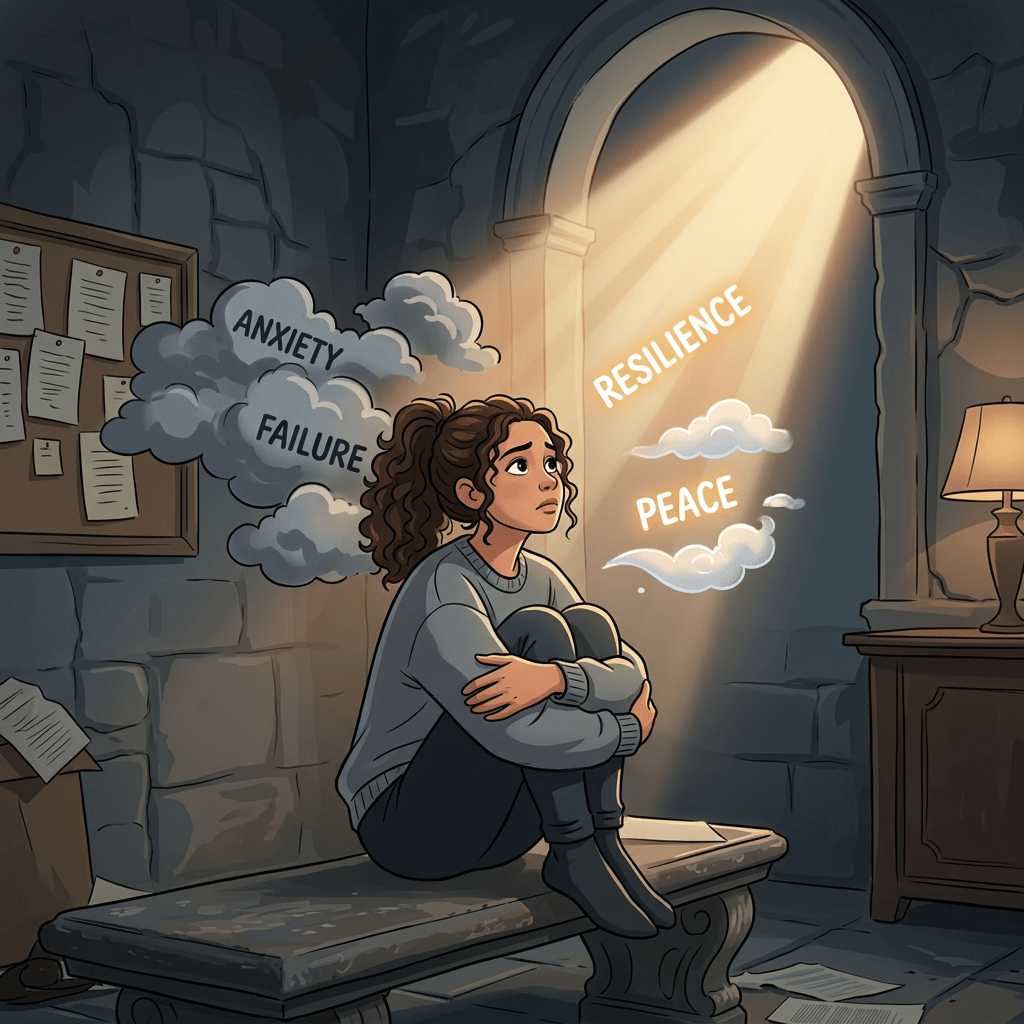
Stuck points are deeper than core beliefs. They often originate from childhood, trauma, or traumatic grief—essentially, any form of trauma. Stuck points keep you locked in a particular belief about how or why the trauma happened. They are self-statements that may minimize, justify, avoid, or place all blame for the traumatic event. Stuck points are deeply rooted thoughts, not distortions, but they can stem from thinking errors.
Stuck Points are concise statements you say to yourself: “ I am a terrible friend,” or “I should have stayed home that night, and this would not have happened.” They can be IF… Then… statements. They cause manufactured emotions that are hard to get over or through. As your emotions should have a beginning, middle, and end when they are manufactured, you get stuck in the middle and ruminate on the thoughts, emotions, and behaviors, which can be depression, social anxiety, isolation, and health issues.
Some Stuck points can be as follows:
- Helpless
- I deserved this
- I am responsible
- I am trapped
- Worthless
- I am not enough
- I always mess up
- I should have been able to fix this.
- I am not good enough.
- lovable
- I am not lovable
- I am not worthy
- I can’t be in a relationship.
- I wreck all my relationships.
- I can’t be close to anyone.
- Power
- I have no power
- I can’t control anything.
- People in power abuse it
- All authorities are abusers.
- If I give control, I will be hurt.
Understanding what stuck points are not is just as important as knowing what they are.
They are not actions or behaviors, like driving the car that night or fighting with your mother. Those are real behaviors, not stuck points. The stuck point is the deep belief you tell yourself: “I am a terrible friend,” “Everyone thinks I am a bad friend.”
Stuck points are not feelings. Emotions are not stuck points. Saying “I feel…” is not a stuck point, as people often use “I feel” instead of “I think.” For example, you might think you are a bad friend or worry that going out could cause an accident, which could leave you feeling scared. The feeling is fear; the stuck point is the thought.
Questions are not stuck points. Asking, ‘Why did I do this?’ is not a stuck point. Wondering if it will happen again is not a stuck point. A stuck point is the deep statement you tell yourself: “I deserve this” or “I am a bad person because this happened.”
Facts are not stuck points. If you saw something or something happened to you, that’s a fact, not a stuck point. The stuck point is what you tell yourself: “I am unlovable, I am unworthy, I deserve bad things, I can’t trust anyone.”
Moral statements are not stuck points. We each have our own sense of morality and standards, but those ideas aren’t set in stone. “People need to be nice,” “Family needs to take care of each other”—those aren’t stuck points. “I can’t trust authority, I can’t trust anyone, my family always fails me” are stuck points.
What do we do about stuck points?
You can learn to reframe, understand where they come from, and come up with a new or alternative thought.


Leave a comment