
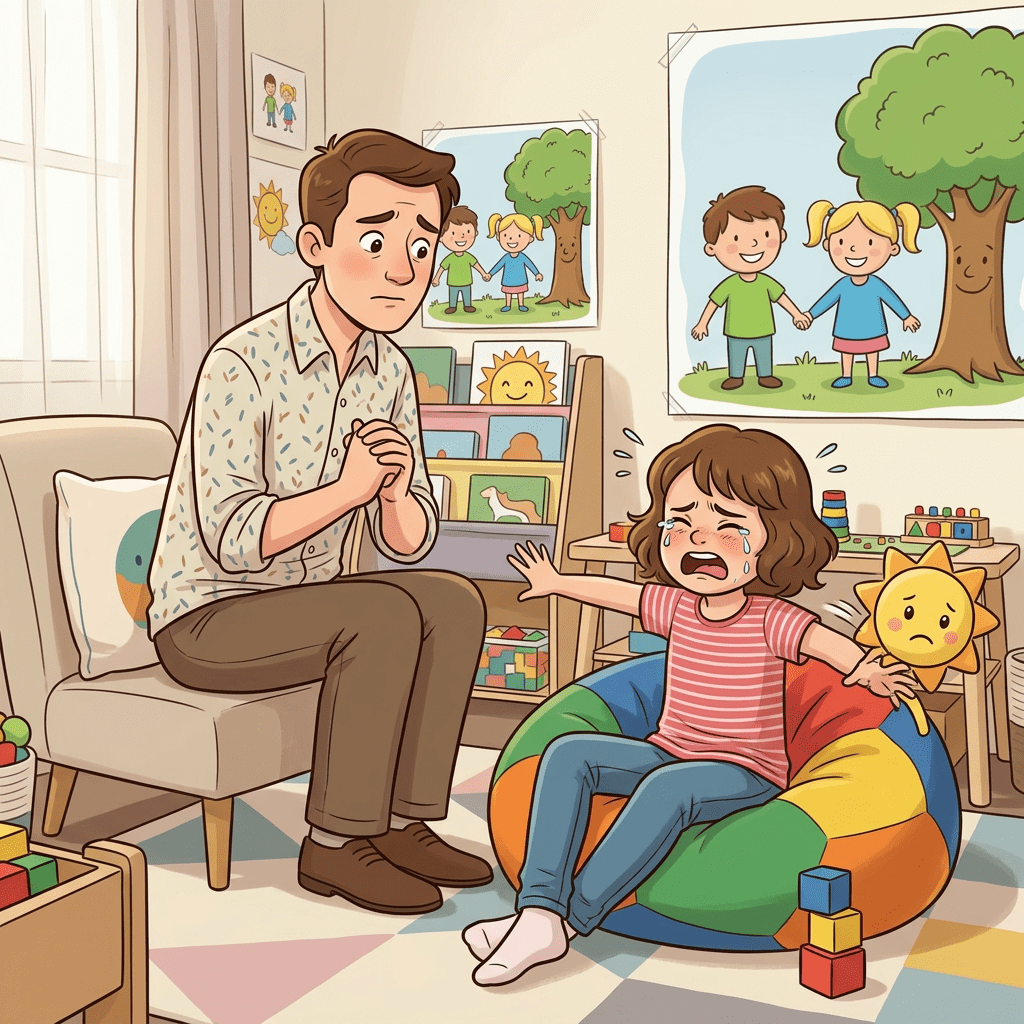
What is attention deficit hyperactivity disorder (ADHD) as related to grief? Is it related, and if it is, how is it exhibited?
“I have a child who is hyper, aggressive, and out of control; I am not sure how to handle her. I know she was struggling at school, but I do not think anything happened to change things.” -words from a grandmother who is struggling with sudden changes in her granddaughter. According to the grandmother, “nothing has changed in the last few weeks, but her behaviors have gotten out of control.” Rebellion, stubbornness, sleeplessness, sassiness, and hyperactivity have recently gotten out of control. It is like a different child, and her behaviors are so out of character that everyone is concerned. an
They are trying to find some relief from this “new child.”
Looking back a few months, we find out that the child’s mother left and is now living with a partner, who is expecting a child. This new family dynamic is neither new nor unexpected. The addition to the family was expected, as mom’s new paramour has children; he is bringing them to the family. The only other information is that they are expecting a baby in a few months; however, that is not new, as “mom” is 6 months pregnant. So what is extraordinary and fearful of causing this change in her behavior?
Grief can take time to manifest in some people, especially children. They seem to be fine, ok, not a problem, or “I don’t care”-their words regarding the situation. I have heard things like ( I am sad, I don’t care, My heart hurts, I am upset, or whatever), but all these mean the same thing, which is, “I am hurt and scared.” The behaviors may reflect their words of “I don’t care” because they are in a fog or an uncaring state. They are in denial- not accepting the situation and saying “I don’t care” helps make that real to them. It gives them the feeling of being in charge when they know they are not in control of anything happening. They feel so out of control that they have to ignore the situation. Once they begin to feel the emotions that pop out -anger, fear, and sadness- it seems like they can’t control them.
“My dog died last week,” says the young client playing in the therapy office. “I forgot to lock the gate, and he got run over; it is all my fault!” “I killed him, my dad said. As he plays with the cars and the farmhouse, he is quiet, never looking up, just building a solid fence around the farmhouse. He has a large structure, so large that no one would ever get out unless the gate was open. He chooses not to have a gate in his fence. He never looks up and keeps building. His attention is on building his fence, and nothing in the room or anyone speaking to him has his attention. He is entirely focused on building his fence, and the last words he heard his father say were, “You killed the dog.”…
A father came into the office and discussed his past and childhood trauma. He mentioned his father would call him a loser and say he would never amount to anything. He felt he was constantly running away from things and thought he might have ADHD, but could not get a proper diagnosis. He was confident it was ADHD, but his doctor was unsure because he did not meet the criteria. He was inattentive and never completed a task. He was constantly moving and lacked focus. He reported his behaviors were worse now that his father had passed away suddenly from a heart attack. He never thought how grief could manifest as inattentive, hyperactive, and destructive behaviors.
Is it grief- how does your child respond when he has lost someone or experienced trauma?


Leave a comment