
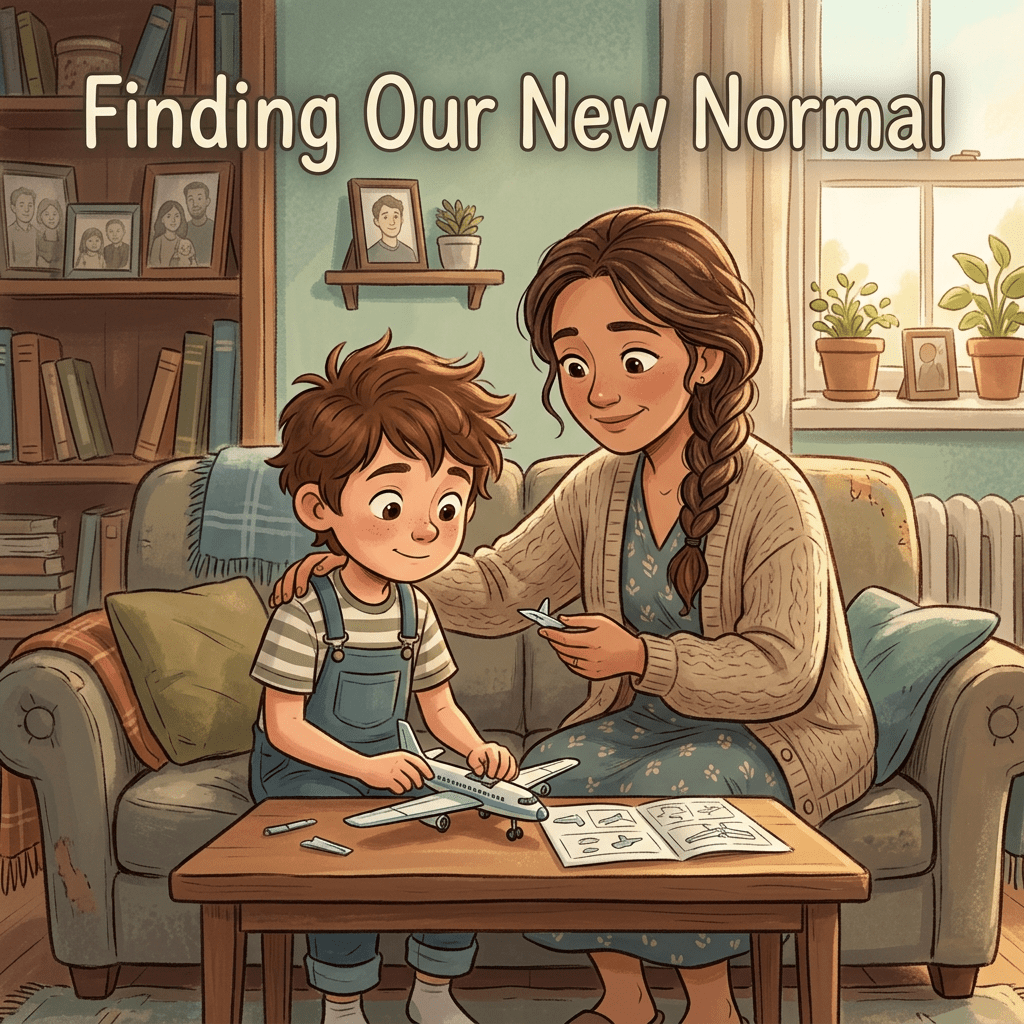
It has been five years since Scott’s mother was killed, and two years since my spiritual mother passed, but the hole in my heart remains. I have accepted they are gone, yet I still struggle with how they left our lives with this hole, the gaps we had between visits, the calls, the letters, and the memories. It feels both recent and distant—yesterday and a lifetime ago.
I struggle with viewing acceptance as the final stage of grief because acceptance implies a definitive endpoint. Acceptance suggests that you finally accept that the person is gone, dead, not coming back; however, for most people, they have that understanding once they have services, the person is buried, or cremated. They accept the idea or fact that they are not coming back to life. However, reentry focuses on how to enter a new, fulfilling life without that person. How do you go on and keep them alive in your mind, heart, and life? This is so difficult for many; some use photos, reminders of their life together, and a spot in their garden. I pulled out letters from my spiritual mother to remind me to move forward. Scott found pictures of his mother with notes telling him he was loved. Little reminders that anchor us in this world without them. Reentry is leaning to find meaning in your life and not staying in the sadness or anger, but moving forward and having a new normal, a new fulfilling life, knowing the loved one will not be with you. Grief is not over with reentry.
In reality, grief is a complex, ongoing process that does not follow a straightforward or linear path toward closure. The recurring triggers, the persistent loneliness, and the continuing heartbreak indicate that grief involves continual reentry into a changed life. Rather than merely accepting the loss, reentry requires actively navigating life after loss, adjusting to new realities, and finding ways to cope with absence while sustaining meaningful memories. To say that a death or loss at any age is not going to change your life is naive. Acceptance suggests that up until now, you have not accepted the loss of your loved one. We absolutely accepted that they were not with us; each day, something reminded us of that fact; however, we did not know how to move forward, to reenter a new normal, a new, fulfilling life without them.
Scott struggled with anger for almost a year and with depression nearly as long, with hopelessness in between. Our dog helped him recover; having something small and dependent to care for allowed him to get out of himself and focus on what this puppy needed. Sometimes we visited the gravesite, where he would lie beside her picture and talk about his life and feelings. During the depression, he had to force himself to visit on special days—Christmas, Mother’s Day, Easter, and Halloween (his birthday)—as part of his grief ritual. The depression started fading into something else, but not completely reentry; it was more a deep sadness with routine motions for his day. He would find life and happiness with the puppy.
The process of reentry into daily life after a significant loss brings unique challenges and requires intentional effort to cope with new realities. We struggled with reentry into daily life without them. For me, reentry meant learning to live without my spiritual mother, not simply accepting her absence but learning how to move forward, holding on to the knowledge she imparted and understanding her love will never leave me. Reentry without Scott’s mother meant something completely different, as she was a different figure in my life. I had to find a way to fill the gaps she left: visits, help when I needed it, and a daughter. With my spiritual mother, I had to learn to focus on her voice in my head, reminding me of what I needed to do, who I was, and which path I wanted to take. Reentry is about navigating our days without the person we love, seek guidance from, or wish to spend time with.
Reentry was difficult and so different for each of us. For Scott, it meant reminding himself of what his mother told him in a dream: ‘Listen to your dad, be nice to your nana, and do your best.’ He would visit her gravesite and ask questions like, ‘What should I do? What would you want me to do?’ He started training his new puppy for agility, focused on art, and remembered what he wanted to do in High School. Slowly, he found a way to keep her in his memory and build a new life without her. The sadness was gone, the hopelessness was over, and the anger was only when warranted. He was learning to build a new life without her. He was changed by what happened. He would put her picture up so he could see it every day. He found the notes she left him and framed them as reminders of her love. He grew and realized it had been 5 years, but it feels like a lifetime ago and yesterday at the same time.
Even so, he still had times of sorrow and fear; he would cry and say, “I will never have that” when he saw other boys with their moms for dances, parties, or events. He began to make friends with other children who lost their mothers either to the children’s division, divorce, or death. Finding this new friend group helped him to stay away from the “happy moms and families.” He stopped visiting her grave monthly; now he goes only on holidays or when something is happening, like moving, graduating, or getting a new girlfriend. He still has to go to where she is to speak to her. He cleans her gravesite, brings new items to make her happy in heaven (he believes she is there), but he is not sending notes by balloon, burying them with her, or asking to do so daily. He has placed her in his heart, in his mind as a reminder, and in his life in a new way.
Ultimately, this phase of grief, which I call reentry, seems to be where many get stuck because they do not know how to move forward. To say they have not changed is untrue; their minds, emotions, and thought processes have been rewired by the loss, producing both emotional and psychological effects that alter how we see the world. Grief at this point often brings brain fog, hypervigilance, and anxiety. Our amgulis is on hyperalert, and our emotions are raw and heightened. Our amygdala is overactive. There is a craving for life after loss, accompanied by the physical pain and fear of moving on. Through these challenges, it is possible to move forward, make plans, and consider the future. Each little step contributes to this process: Scott chose to go back to school, and I moved so we could start anew. Others might begin a new class, apply for a different position, or join a club, each step helping to facilitate reentry.
It brings a feeling, but also the knowledge that you have to move forward. How to do that and be successful, keep them in your memories, hold them in your new dreams? Most become upset or scared when they feel like they need a big change; of course, they do. They went through a huge change in their lives, and now they need to find a way to carry on. Another change usually happens. Scott went back to school; I bought a house; others changed jobs. Each person is different in what they need to change when they realize they have changed due to this loss.
Reentry does not mean you have forgotten them; a grief ritual can help you preserve your memory and do something important and meaningful for that loved one. As you find your new normal and choose how to reenter life without the person, a grief ritual or a grief journal could help. Many of my clients find this journal a place to put their thoughts and pain. When you need to speak with them, tell them what is going on, show love, and you can put it in the journal. Like Scott, he had to write things to his mother; we all need to put our thoughts down to be real and know we said them. This grief journal can be an extension of the loved one. Buying a journal for my spiritual mother would look like this: One with doves, pink roses, and sunshine. Every time I miss her or need to tell her something, I would put it in the journal. I could write next to my entry what I know she would say: because she has probably told me many times. I would put it away in a special place and only take it out when I needed her. Scott’s journal was a binder with his mother’s notes and extra paper, giving him a place to write what he needed to say. Each person’s journal is different.
A grief ritual could be like Scott’s, a balloon on Mother’s Day with a note tied to it. Letting it go at her gravesite and sitting with her favorite song or dessert. Taking the time to honor them and commune. Not everyone finds this helpful, but most can find a ritual that works for them to stay connected to their loved ones while remembering them without forgetting them. Some find grief groups, grief journals, meditation, volunteering, or learning a new hobby. All these things help them to move forward and bring the loved one into their life. Scott played the violin, joined archery, and JROTC. He knew his mother would have loved to see him do those things, and he knows she would be proud of him. Finding what makes you happy and able to move forward can be as simple as a cup of coffee on the deck each morning as you watch the sun come up or set.
Reentry is not leaving them; it is not selfish; it is not avoidance; it is starting a new normal with them in your heart, remembering to honor them in your life, and knowing life has changed forever. In fact, reentry is an ongoing process, as is grief; it allows individuals to include their loved one’s memory into a new sense of self and daily existence. This ongoing change and new normal allow you to both mourn and grow, as grief reshapes routines, identities, and relationships. Rather than achieving a final stage, reentry is about adaptation, resilience, and the lasting significance of those we have lost. In this way, reentry acknowledges the permanence of both change and connection to your loved one, while recognizing that, even though life is different, it continues, even though that person or persons are not with you in this world.


Leave a Reply