
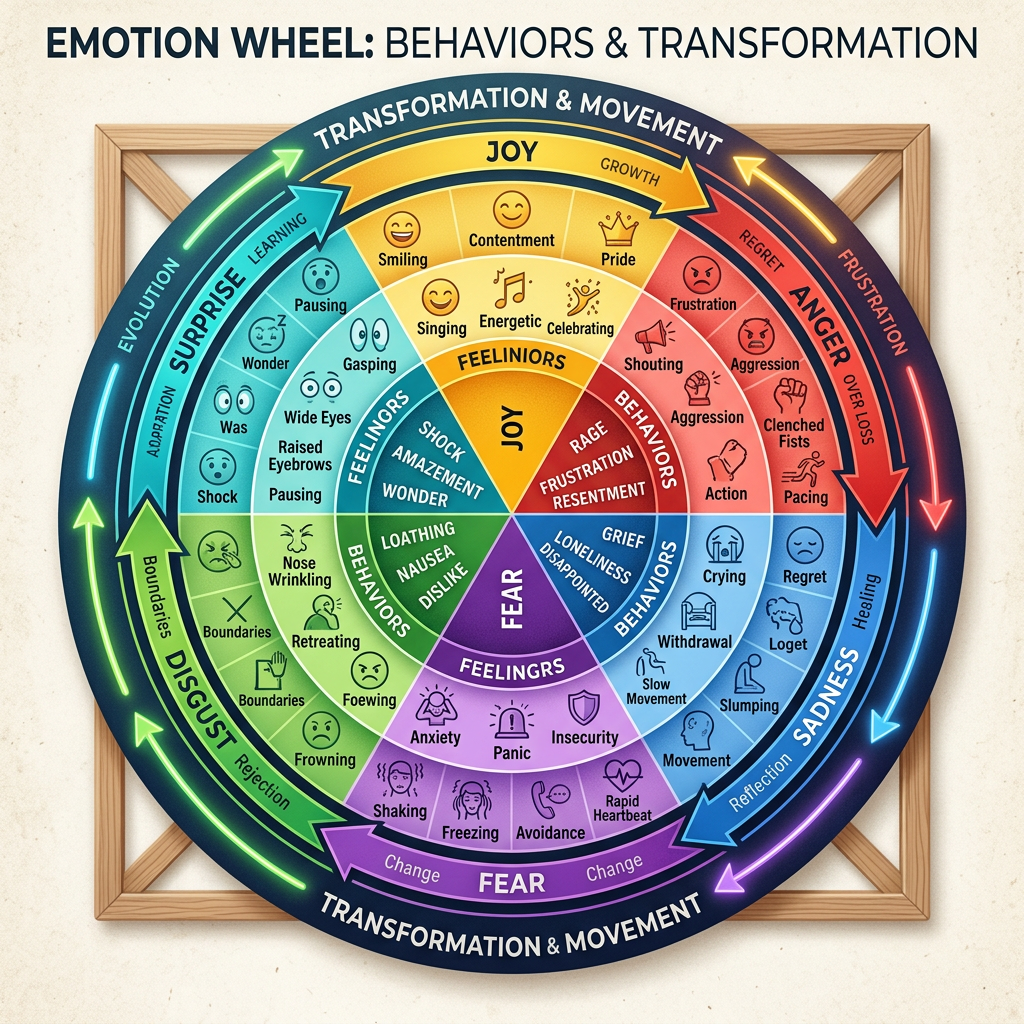
According to the APA, in psychology, emotions are considered complex, brief, and automatic reaction patterns to significant stimuli. Defined by the APA Dictionary of Psychology as a combination of subjective experiences, physiological responses (e.g., increased heart rate), and behavioral expressions, they help individuals cope with important life events. Emotions are often considered adaptive for survival and are distinguished from feelings and moods.
Emotions typically have a beginning, middle, and end. They do not last in the long term, and they should not be manufactured. Manufactured emotions don’t progress; instead, you get stuck in one emotion and cannot move past feelings such as anger, guilt, fear, or shame. This knowledge leads to a better understanding of emotional patterns.
Emotions have three components, which are subjective experience: how you feel or interpret something, which you would call anger, fear, or another emotion. Automatic responses, such as how your brain or the ANS (autonomic nervous system) reacts to emotions like anger, fear, or joy, are controlled by the amygdala. This may cause a rapid heart rate, muscle tension, sweating, or a heightened fight-or-flight response. And your behavioral responses are causing you to yell, scream, cry, or run away, hide, or freeze.
In summary, emotions are your natural reactions and behaviors, while feelings are how you name those reactions or responses. This distinction helps to better understand psychological processes.
When using CBT or CPT, understanding how your emotions work clarifies how you respond to thoughts and the behaviors and reactions that follow. Recognizing these connections further supports emotional awareness and self-regulation.
You also have covering emotions: the emotions you are comfortable with and use to cover those you are unable to express or find uncomfortable. For example, anger may be comfortable with reactions of yelling, violence, or aggression, but sadness is not as comfortable to show or deal with, so you become aggressive when you are sad.
Often, we allow our emotions to control us; we give them authority, and our thoughts tie to them, causing us to react accordingly. Meekness is the strength of control and strength over our emotions. Understanding that you have control over your emotions also allows you to change those emotions, which in turn changes your thoughts and stops behaviors.
Once you have the emotional revelation and emotional vocabulary, you can name the emotion, or multiple emotions you feel in any situation, change the emotion, and identify the behavior attached to that emotion. This skill is the basis of CBT or CPT.


Leave a comment