
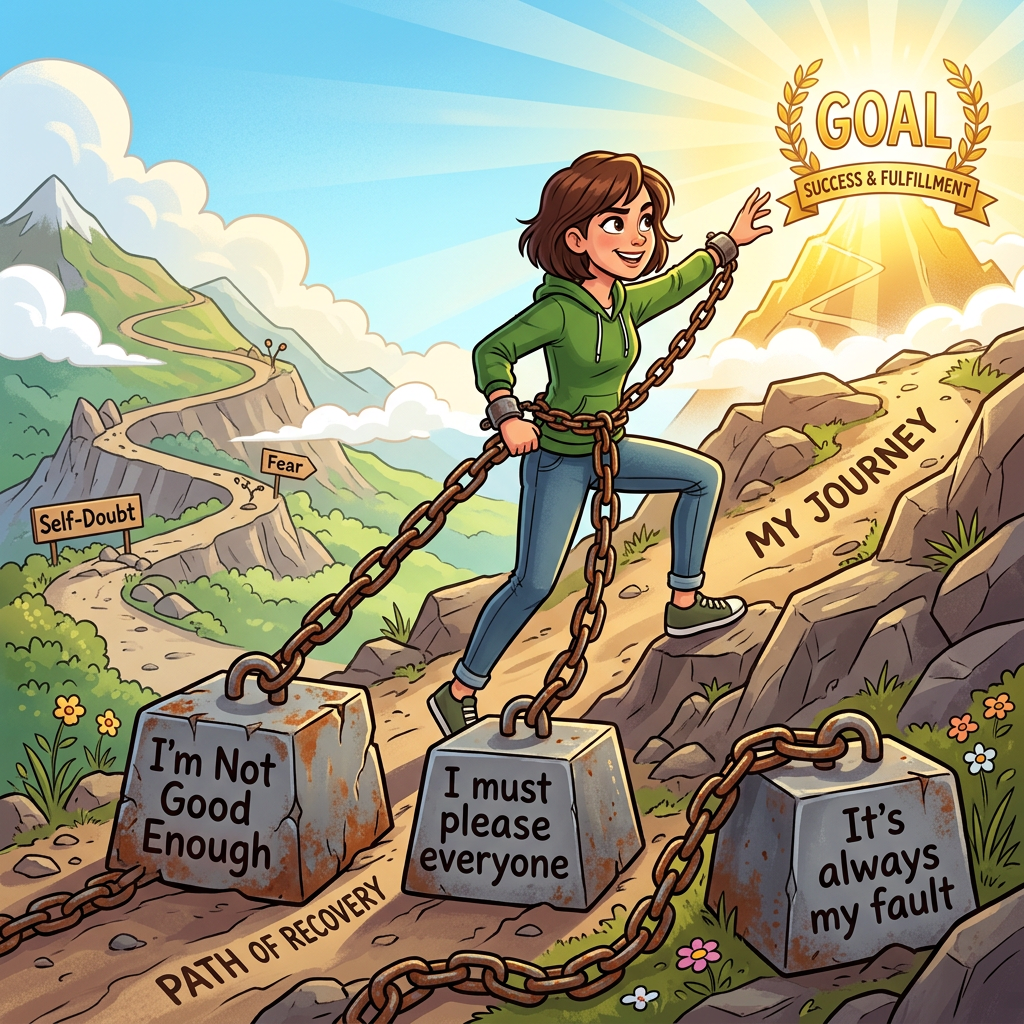
Core beliefs and stuck points are elements of our thought process that may keep us focused on incorrect or biased information, shaping our perceptions. Core beliefs are what we tell ourselves in our deepest layers and regard as absolute truths. These can be good, healthy, or unhealthy. For example, a core belief about religion or spirituality might be healthy and help you feel safe and understood. In contrast, beliefs from childhood such as “I am not good,” “I am bad,” or “I am incapable” tend to be unhealthy, bringing fear, anxiety, or depression. Recognizing these beliefs helps set the stage for understanding their impact.
When addressing or understanding core beliefs, you can look at bias. Core beliefs can be biases or judgments against others, the self, or the community. Beliefs such as “Life is unfair,” “No one is safe,” or “I can’t choose good friends” evoke strong emotions and may prevent healthy relationships with others. Core beliefs about others, such as a community, state, or group of people, make it hard to trust your community or neighbors. You may even take these ideas into the workplace. These biases demonstrate how core beliefs can shape our experiences and interactions, holding us back.
Core beliefs have four characteristics that make it hard to let go and begin reframing. They are deeply rooted, usually from childhood or young adulthood. They tend to be backed by a thinking error of absolutes and become rigid, putting you on a hamster wheel of thoughts. They are also deep down and could be unconscious, which makes them hard to detect because they become part of who you are and your thinking. Lastly, they are confirmed by yourself, making it hard for others to counter them. Meaning: you have the distortion or thinking error tied to them, so if you have a core belief that you are not good enough, never do anything right, or fail at everything. No matter how much I tell you you did a great job, you won’t actually believe it.
Core beliefs are difficult to move past, and could be impossible to ignore. You can, however, reframe them with a simple test.
Is this belief going to hold up in a court of law?
Am I looking at the 20% and making it 110%- so is this belief valid?
If I look at the 80%, is that more realistic?
Am I mixing up what is possible with what is likely? For example, is it possible that the tree will fall in the next storm? Yes, but is it really likely? probably not
Recap:
Where did this belief come from? If it came from yourself, an abuser, childhood, or an entity like society, church, or school, maybe even parents. Probably not a reliable source. So, probably not going to stand up in a court of law, probably only 2% correct, and not realistic.


Leave a comment