
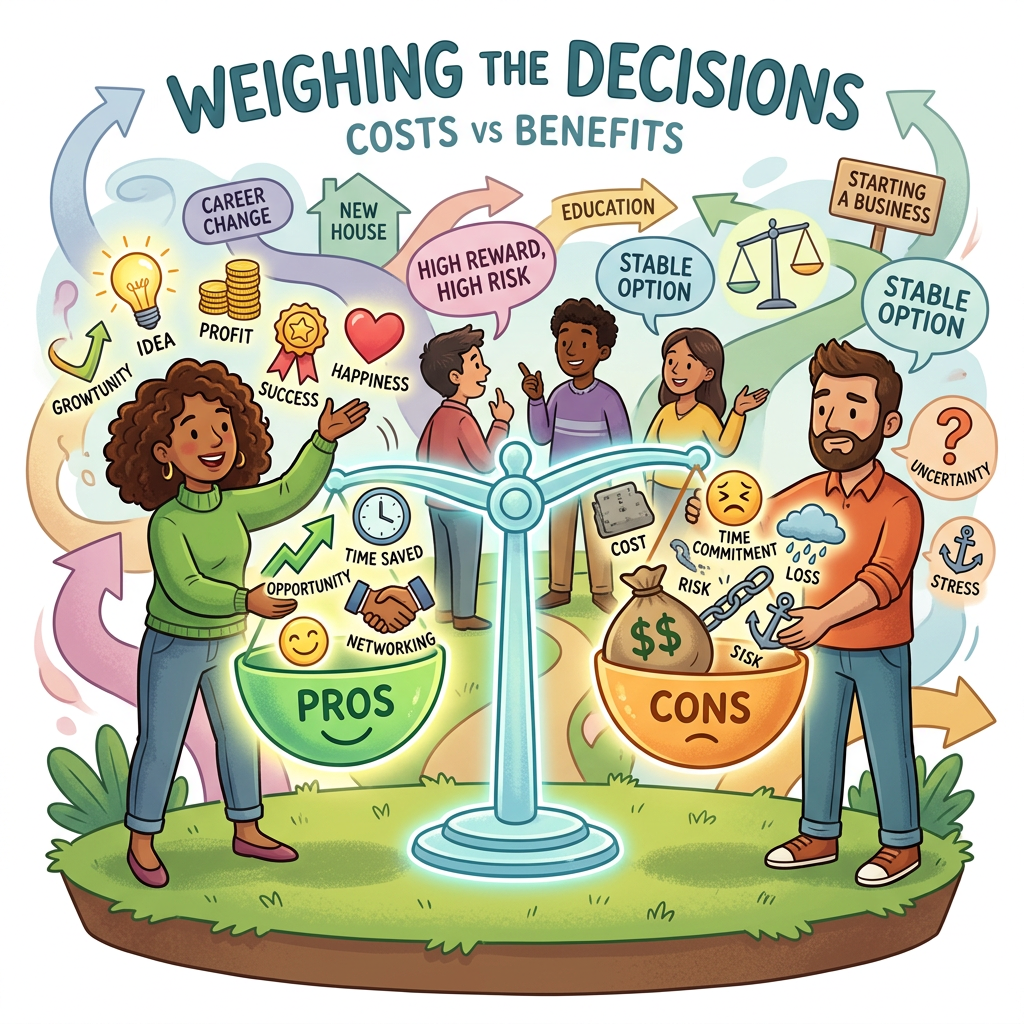
What thought, behavior, or action do you want to change? Is changing worth it to you? Will the benefit outweigh the cost?
If you are using this for a thinking error or stuck point, the question is: how much or how important is that idea/thought to you? Are you receiving any benefit from that thought or stuck point?
If you wanted to use this tool for a stuck point like “I am not good enough,” how important is it to you to hold onto that thought and keep believing it? If you want to keep it, what is the cost? I would wonder if the cost was self-worth, a new promotion, or your opinion being heard, for example.
If the thought is: “I need them to apologize,” you would add the cost to this. They may never apologize because they do not see anything wrong. They may start an argument and bring others into this struggle. The real situation is that they never apologize, and you want them to do something you expect, but they can’t, won’t, or don’t, so your expectation for them is unrealistic. In this situation, the outcome could be assertive communication with a conversation of: “ I feel hurt because…. You may not see that, however, I think we have to take time/space, or something like that. In this example, the benefit is that you assert yourself, name the emotions, state the result or consequence of the action, and maybe gain clarity on the other person’s part.
Cost-benefit applies to addictions, purchases, and relationships. Weigh both sides with less emotion for a realistic decision.
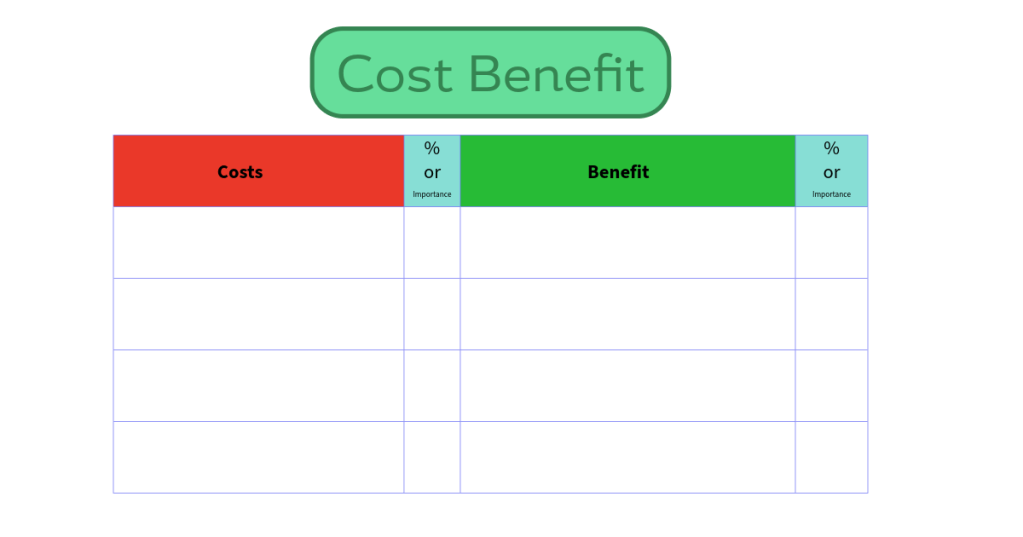
Write down the costs and benefits of your thought or behavior. Next, rate each item’s importance using a scale from 1 (not important) to 10 (very important).
After you review your list of costs and benefits and their importance ratings, use this information to create a more adaptive alternative to your current thought or behavior.


Leave a comment